Career Break vs. ATS: How to Explain the Gap and Still Get Through
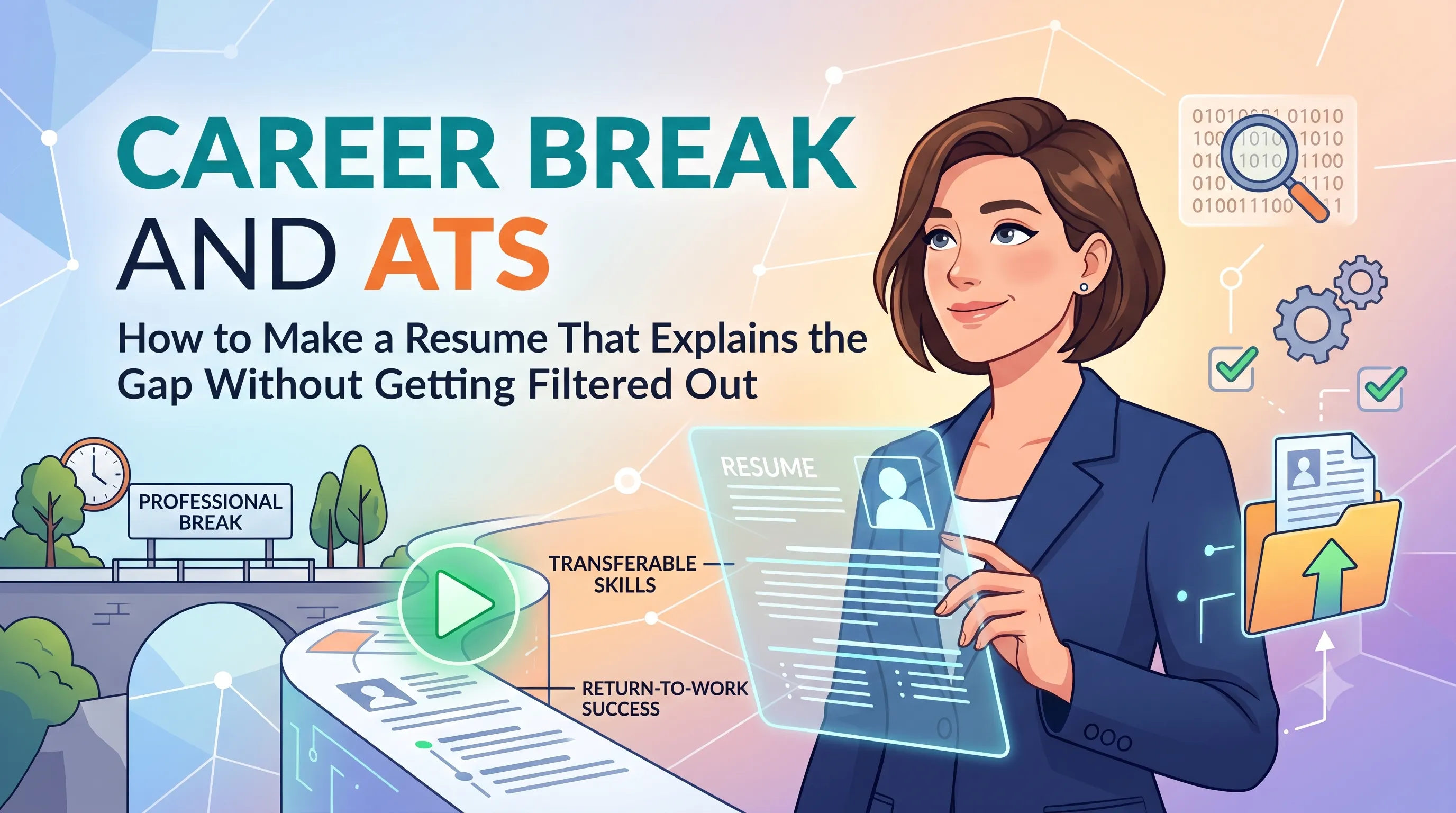
The real issue: gaps + robots, not gaps + humans
Most hiring managers can handle a career break; what often filters you out first is software that only sees missing dates and incomplete timelines. Many companies now configure their ATS or AI screeners to flag, down-rank, or at least highlight gaps as short as six months, because the system cannot “read between the lines.” That means you cannot just hope to explain your break later—you have to format it so the ATS reads it as a valid, labeled block of experience from day one.
When a gap is worth calling out
You do not need to turn every tiny gap into a dramatic entry, especially if it is short or far in the past. Several modern guides suggest a simple rule of thumb: gaps under three months often do not need to be called out, three to twelve months may warrant a light explanation if recent, and breaks longer than twelve months usually deserve a clear “Career Break” style entry in your recent timeline. If you have multiple gaps, using structure—skills-first layout, grouped consulting, or year-only dates—can keep the page from looking like a stop‑start graph of your life.
Step one: give the gap a name
The fastest way to make a break ATS-friendly is to stop treating it like empty space and start treating it like an honest role. Career coaches often recommend using a simple title like “Career Break,” “Family Care Career Break,” “Health Recovery,” “Relocation and Career Break,” or “Professional Sabbatical,” followed by dates, just like any other line in your experience section. That one line tells the ATS “this block is intentional” and tells humans you are not hiding anything—you are owning it.
Example structure (chronological resume):
- Career Break – Family Care and Professional Development | Lisbon, PT | 2022–2024
- Provided full‑time care for a family member while completing a certification in data analytics.
This looks like a legitimate entry to both the system and the recruiter reviewing your timeline.
Step two: frame what actually happened
A gap is not just “unemployment”; it is a period where something specific was going on, even if that was health recovery, caregiving, education, or relocation. Career experts consistently encourage you to keep the explanation short, factual, and honest: one line about the reason, optionally one line about anything constructive you did, such as study, volunteering, or freelance work. You do not owe your life story—only enough context to stop people (and algorithms) from filling the blank with assumptions.
Step three: bake in relevant keywords (without faking)
ATS tools still care about keywords, even in your career break entry, so if you did anything remotely relevant, say so in concrete terms. For example, “Completed Google Data Analytics Professional Certificate and built portfolio projects in SQL and Tableau” gives the system tools, credentials, and activity it can recognize. If you did freelance or consulting during the break, several recruiters recommend grouping it as “Freelance Consultant” or “Independent Projects” with real bullets, rather than letting that time vanish from the timeline.
Formatting the gap so ATS does not freak out
What trips ATS filters is usually not the break itself, but missing or inconsistent date strings and unexplained holes in a reverse‑chronological history. To reduce damage, keep a clean, single-column format, use the same date pattern everywhere (for example, “Mar 2020 – Jun 2023”), and avoid leaving multi‑year blank spaces with no labeled entry. For shorter or older gaps, some university and careers services suggest using year‑only dates (for example, “2019–2021”) to make small breaks less visually prominent, while still keeping the sequence technically continuous.
Where to place the story: summary, experience, and beyond
You have three main places to handle your break: the experience section, a short line in your professional summary, and your cover letter. On the resume itself, keep it minimal—title, dates, and one concise bullet about what you were doing. If you want to add more nuance, cover-letter experts recommend addressing the break in one tight sentence, then pivoting quickly back to the skills and value you bring now.
Example cover-letter line:“After a planned two‑year career break to relocate and complete a UX design bootcamp, I am excited to return to product design roles where I can apply my previous experience in SaaS and my new skills in research and prototyping.”
Turning the break from liability into signal
The stigma around career breaks has softened noticeably; many employers now expect non‑linear careers, especially after the last few years. Guides from career services and national careers programs emphasize focusing on transferable skills gained during your break—like project management, cross‑cultural communication, self‑directed learning, or caregiving skills that map to your target role. When you highlight growth (courses, certifications, volunteering, portfolio projects) instead of apologizing, you make the gap read like a deliberate chapter, not a collapse.
ATS strategy + human strategy = your real plan
Pure ATS optimization is not enough; even the best‑formatted resume with a career break still faces human questions later. Experts in AI‑driven screening recommend a dual approach: make the resume technically clean for algorithms, then use networking and referrals to tell the fuller story directly to people. A referred candidate with a well‑explained break often bypasses automated filters entirely and gets to do what really changes minds: explain their story with tone, nuance, and the confidence of someone who did not try to hide.